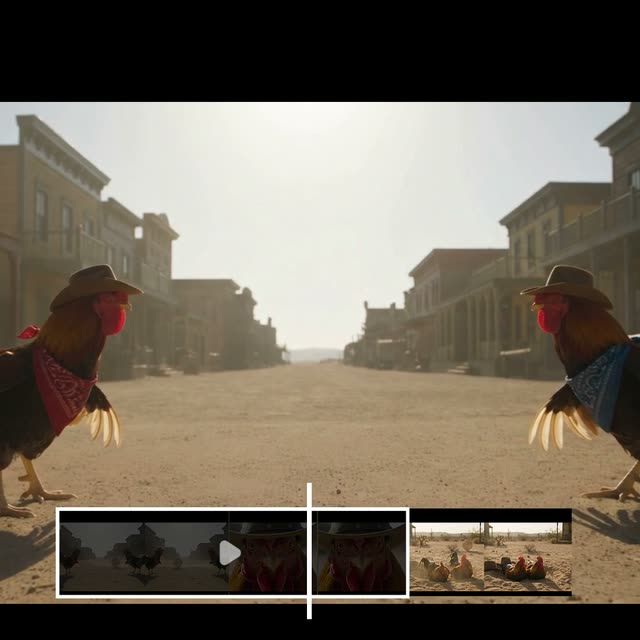
This ComfyUI tutorial workflow shows how to extend an existing video in coherent, story-aware chunks using the GeminiVideoOmniV2 node (Gemini Omni 1.1 Flash). It loads your clip with LoadVideo, extracts the final moments as context via Video Slice, and asks Gemini to continue the scene for up to 10 seconds per run. The model reads the last 10 seconds of visual context so characters, motion, camera framing, and scene layout carry forward naturally instead of restarting from scratch. SaveVideo then exports the extended result as a new clip.
Technically, the pipeline is a loop-friendly chain: LoadVideo → Video Slice (tail window) → GeminiVideoOmniV2 (prompted continuation) → SaveVideo. You can iterate this up to four times to build a 40-second story, or branch at any step by changing the prompt. The GeminiVideoOmniV2 node also supports optional image references, which you can attach mid-story to introduce new characters or props while maintaining continuity with the previous scene. The included MarkdownNote explains the required input asset path and tips for best results.
API
通过代码使用此工作流
每个 Comfy 工作流都是一个 JSON 图。下面的内容就是此工作流的完整数据,ComfyUI 运行时也是如此——你可以从该 URL 获取、放入版本控制,或在 ComfyUI 中加载并逐节点运行。
使用 Comfy SDK 从 TypeScript 或 Python 运行。相同代码可用于 Comfy Cloud 或你自托管的 ComfyUI——只需更改基础 URL。
// Install (beta)
npm i @comfyorg/sdk

// Run this workflow (TypeScript)
import { Comfy } from "@comfyorg/sdk";

const client = new Comfy({ apiKey: "comfyui-..." });
const wf = await client.workflows.fromFile("workflow_api.json");
const job = await client.run(wf);
await job.getOutputs("<output-node-id>")[0].toFile("output.png");
SDK 需要 API 格式的工作流:在 ComfyUI 中打开此工作流,使用 文件 → 导出工作流(API)。