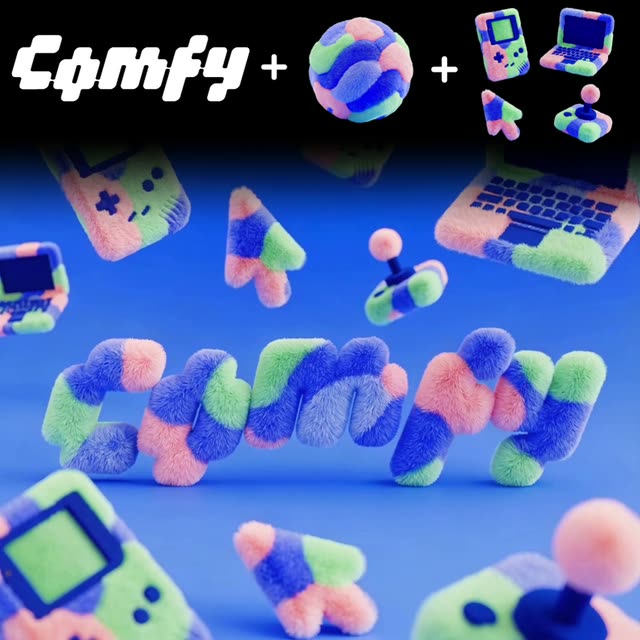
此 ComfyUI 工作流旨在将静态Logo转化为动态、带纹理的视频资产,非常适合提升品牌形象。通过一系列专业节点和模型,用户可上传Logo及所需纹理和元素,并将其无缝整合为统一的视频输出。流程以“LoadImage”节点开始,导入Logo、纹理及其他元素。接着,“GeminiImage2Node”处理这些图像,将指定纹理和元素应用到Logo上。该节点采用 Gemini3 Pro Image Preview 模型,确保高质量图像处理。
图像准备好后,“ByteDanceImageToVideoNode”将带纹理的Logo转为视频格式,利用 ByteDance 模型的先进技术实现流畅过渡和专业品质。最后,“SaveVideo”节点输出成品视频,可直接用于品牌和营销素材。此外,“SaveImage”节点可用于从视频中截取静帧。此工作流特别适合品牌设计师,无需复杂视频编辑技能即可制作吸引人的视觉内容。
API
通过代码使用此工作流
每个 Comfy 工作流都是一个 JSON 图。下面的内容就是此工作流的完整数据,ComfyUI 运行时也是如此——你可以从该 URL 获取、放入版本控制,或在 ComfyUI 中加载并逐节点运行。
使用 Comfy SDK 从 TypeScript 或 Python 运行。相同代码可用于 Comfy Cloud 或你自托管的 ComfyUI——只需更改基础 URL。
// Install (beta)
npm i @comfyorg/sdk

// Run "为 logo 添加纹理元素" (TypeScript)
import { Comfy } from "@comfyorg/sdk";

const client = new Comfy({ apiKey: "comfyui-..." });

// This workflow, exported in API format (see note below)
const wf = await client.workflows.fromFile("templates-textured_logo_elements_api.json");

const asset = client.assets.fromFile("input.png");
wf.setInput("4", "image", asset);  // LoadImage

const job = await client.run(wf);
await job.getOutputs("13")[0].toFile("output.png");  // SaveImage
SDK 需要 API 格式的工作流:在 ComfyUI 中打开此工作流,使用 文件 → 导出工作流(API)。
常见问题
常见问题









Showing 30 of 30 templates